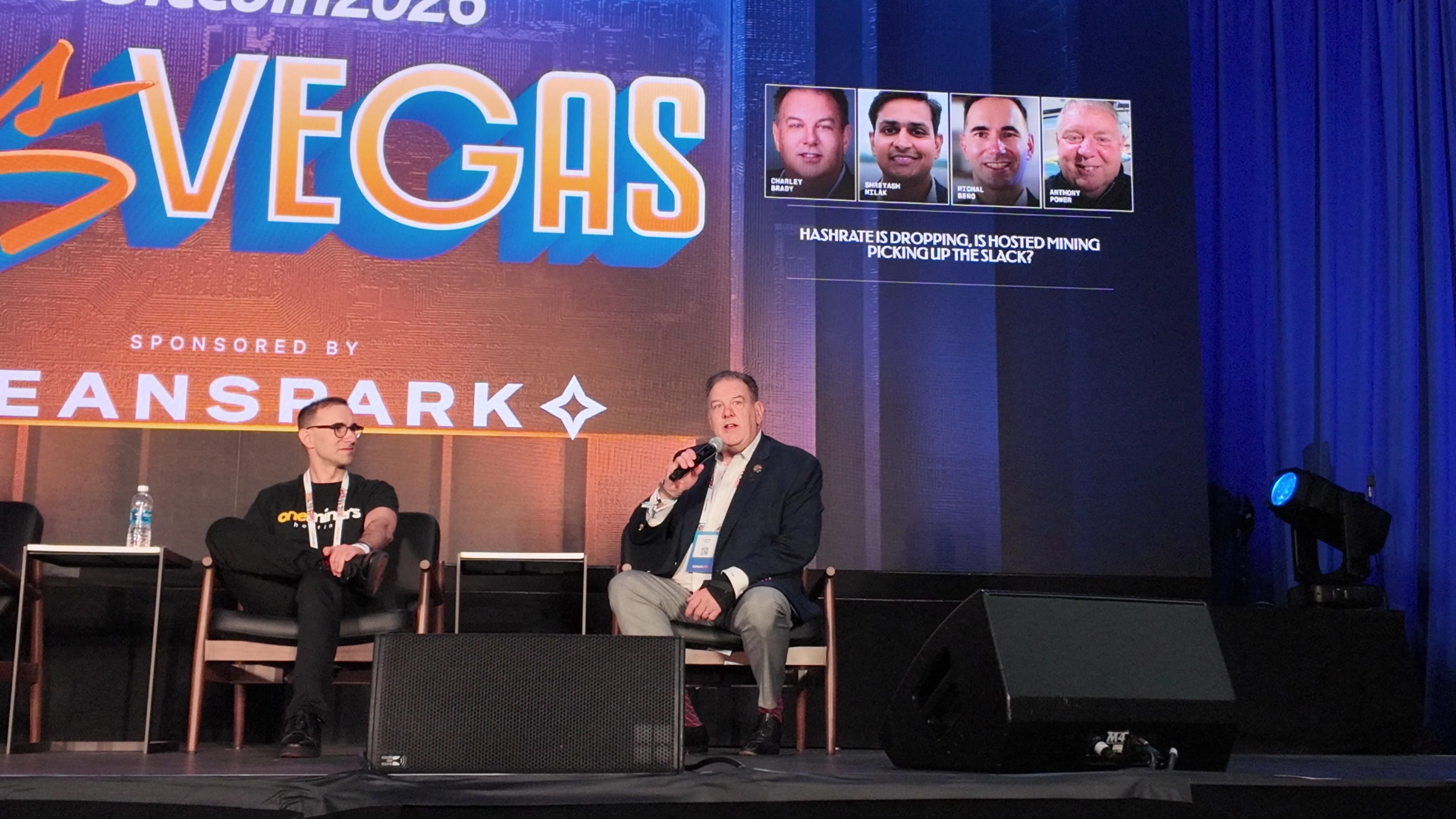
The Bitcoin 2026 conference at The Venetian, Las Vegas, brought together the full spectrum of industry, including miners, investors, exchanges, and infrastructure providers. For BitFuFu (NASDAQ: FUFU), the week was an opportunity to step out and talk about where the mining market is heading, why the cloud mining model has proven so durable, and why the company remains measured on the HPC/AI pivot that has consumed so much of the industry’s attention.
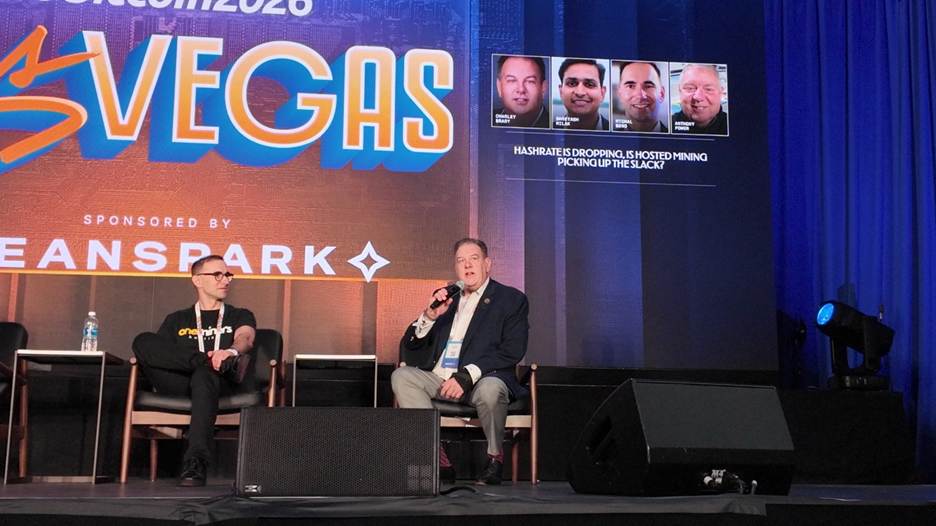
VP of Investor Relations Charley Brady was on the ground in Las Vegas, speaking on a panel titled “Hashrate is Dropping. Is Hosted Mining Picking Up the Slack?” Here’s a recap of the key themes from his panel.

Why Global Hashrate Has Been Dropping
The decline in global Bitcoin network hashrate, from 1.15 ZH/s last year to 825 EH/s in January, has been one of the biggest storylines of the past several quarters, and Brady offered a clear-eyed breakdown of why it’s happening.
At the individual level, lower Bitcoin prices during the down cycle pushed a significant number of smaller self-miners into unprofitability, and those machines came offline. At the institutional level, some of the larger miners had built capacity around older-generation hardware that simply couldn’t sustain operations at current economics, and those rigs have been quietly decommissioned.
Several major publicly listed miners have also made deliberate strategic pivots toward high-performance computing (HPC) and AI workloads, redirecting power capacity that once went to Bitcoin mining. That shift is contributing to a meaningful reduction in network hashrate, and it’s showing no signs of reversing in the near term.
The Cloud Mining Model: Built for Exactly This
BitFuFu’s business model is designed around an insight that mining economics are cyclical, and operational flexibility is sometimes worth more than raw capacity.
The company’s cloud mining platform, which leases hashrate to institutional and retail customers, accounts for roughly 70–75% of revenue in 2025. The key advantage isn’t just the product itself; it’s the optionality the model provides. BitFuFu can dynamically shift hashrate between self-mining and cloud mining depending on where market conditions sit in the cycle. When cloud economics are favorable, as they have been for the past year or more, the platform absorbs the bulk of capacity. When self-mining makes more sense, the company can rotate into that posture.
As a result, BitFuFu has been profitable (in terms of adjusted EBITDA) every year since its founding, a track record that Brady described as a genuine differentiator in an industry where many operators treat profitability as a cyclical exception rather than a baseline expectation.
“For a public company,” Brady noted, “maintaining profitability and cash flow isn’t optional.”
On Hardware: S21s Now, Eyes on S23s
The equipment conversation at Bitcoin 2026 was, as always, partly a discussion about energy costs and partly a discussion about generational hardware transitions.
Brady said energy cost is the primary variable. Miners sitting behind grid power at sub-3 or sub-4 cents per kilowatt hour have the luxury of running less efficient machines and still making the economics work. But that describes a minority of operators. Most of the industry is hunting for high-efficiency machines at competitive prices.
BitFuFu has largely completed its transition away from S19s. The fleet today is running almost entirely on S21s, and the next inflection point will come when S23s begin reaching the market in volume, and what that does to S21 pricing across the industry.
One advantage is BitFuFu has Bitmain as a strategic partner, which provides favorable financing terms and a degree of capital flexibility that many competitors don’t have access to.
On HPC/AI: Evaluating, Not Sprinting
No conversation about Bitcoin mining in 2026 can avoid the HPC/AI question, and Brady’s take was grounded compared to some of the more aggressive commentary in the industry.
BitFuFu is evaluating the opportunity. But several realities give the company reason to move carefully.
First, BitFuFu’s business model is relatively asset-light: The company does own sites in Ethiopia, Oklahoma, and other places, and is actively building out its owned footprint, but a full pivot to HPC/AI requires owned infrastructure, and that infrastructure comes at a dramatically different price point.
The capital comparison is stark: building out an AI or HPC data center runs $8–12 million per megawatt, versus $400,000–$450,000 per megawatt for Bitcoin mining capacity.
Brady also pushed back on the assumption that every Bitcoin mining site is transferable to AI use cases. Fiber access, grid infrastructure, proximity to demand centers, many mining sites were optimized for factors that have nothing to do with AI workload requirements.
“HPC/AI has definitely created more competition for larger sites, but there are still plenty of Bitcoin mining sites that work just fine,” said Brady.
HPC/AI has not eliminated the pool of quality Bitcoin mining locations, and the return-on-invested-capital case for AI infrastructure, at least over a three-to-five-year horizon, is not as obvious as some projections suggest.
Bitcoin Economics 101
For new Bitcoin miners, Brady suggested two variables dominate everything else: network difficulty and hash price. Those two data points, combined with your energy cost and cost of capital, determine whether you’re running a good business or not.
BitFuFu’s positioning—a flexible, platform-driven, capital-efficient model with a strategic equipment partner—is built to perform across a range of outcomes on both dimensions.