In January 2024, the U.S. approved its first spot Bitcoin ETFs.
At the time, it marked the end of a decade-long wait for the crypto industry and quickly became a focal point of global financial markets.
Two years later, Bitcoin ETFs are no longer a novelty—yet the data quietly tells a much larger story.
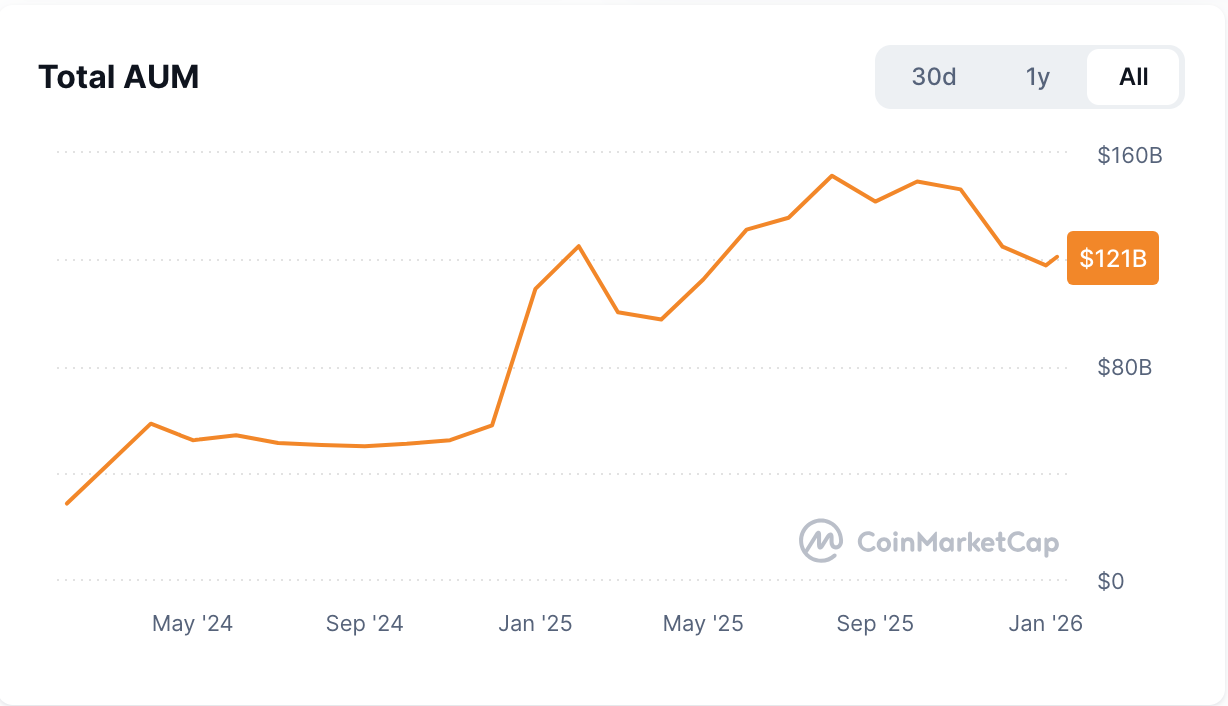
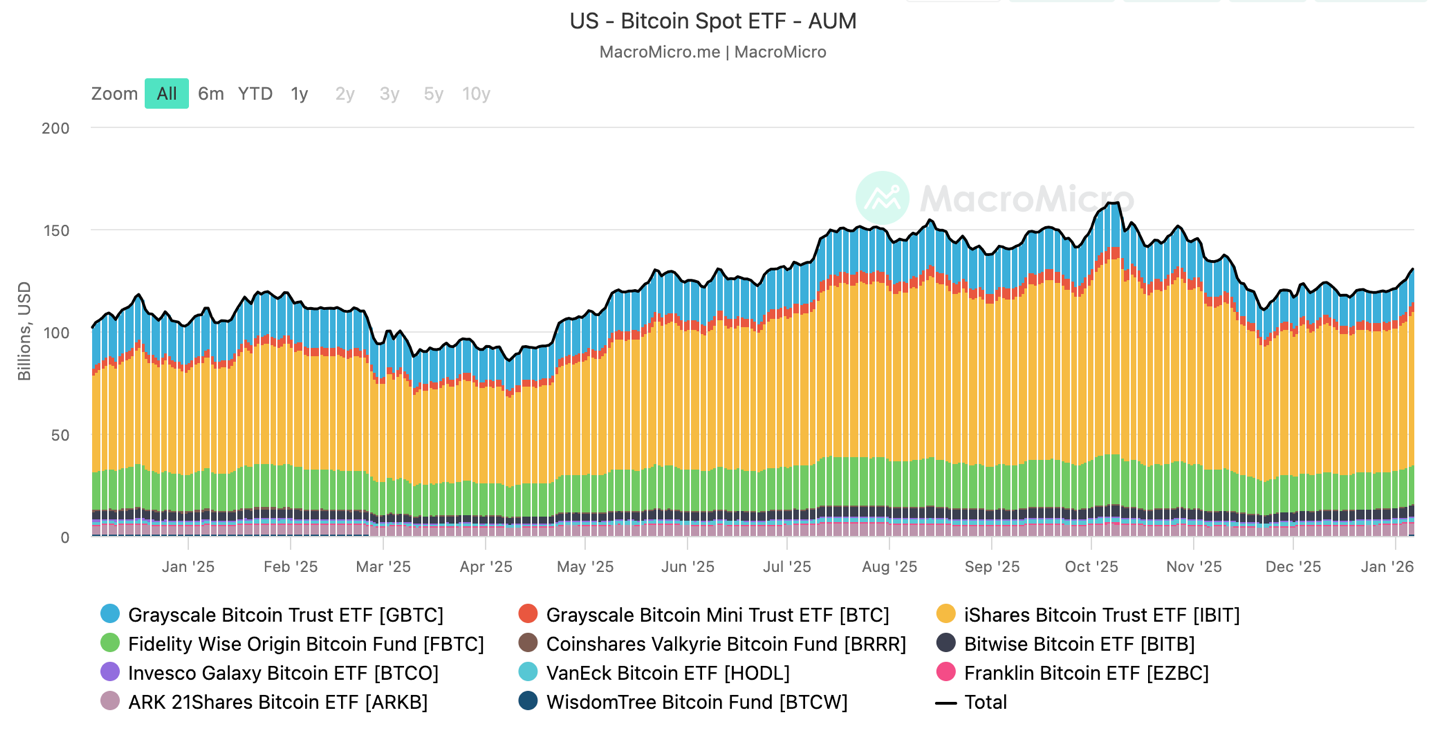
Total assets under management (AUM) have now reached $121 billion. The five largest funds—IBIT ($74.11B), GBTC ($16.40B), FBTC ($18.89B), ARKB ($5.81B), and BITB ($5.35B)—together representing about 96.6% of the total market, highlighting a highly concentrated, institution-led structure.
On the trading side, The Block’s data dashboard shows that cumulative trading volume of U.S. spot crypto ETFs surpassed $2 trillion on January 2. For comparison, the market first reached $1 trillion in cumulative volume on May 6, 2025—about 16 months after launch. The next trillion was added in only eight months, cutting the time in half. BlackRock’s IBIT alone continues to dominate, contributing roughly 70% of total trading volume.
Capital flows tell a similar story. In 2025, U.S. spot Bitcoin ETFs captured the majority of net inflows across crypto ETFs, outpacing Ethereum ETFs and reinforcing Bitcoin’s leading position within the crypto ETF landscape.
If ETF approval once symbolized Bitcoin’s entry into the mainstream financial system, these figures now suggest that Bitcoin has become a structurally integrated allocation within institutional portfolios.
These figures represent more than simple growth in scale. They serve as an institutional validation: Bitcoin is entering the regular operating framework of the global financial system at an unprecedented pace.
The Historical Position of Bitcoin ETFs: Not an Overnight Decision
The birth of spot Bitcoin ETFs was not a sudden act of regulatory goodwill, but the result of a long and cautious institutional negotiation.
Before 2024, applications for Bitcoin ETFs in the United States had been filed and rejected repeatedly for more than a decade. Regulators consistently focused on three core concerns:
· Whether the underlying market was sufficiently mature and resistant to manipulation
· Whether custody, clearing, and auditing systems were reliable
· Whether investor protection mechanisms were adequate
These concerns were not judgments about Bitcoin’s intrinsic value, but about whether the asset could be responsibly structured into regulated financial products.
Historically, the concept of a Bitcoin ETF first emerged around 2013, shortly after Bitcoin prices began attracting mainstream attention. As direct access to Bitcoin remained difficult for retail investors within traditional brokerage systems, financial institutions started designing exchange-traded products to bridge that gap. However, the U.S. Securities and Exchange Commission (SEC) rejected these proposals for years, citing market integrity and structural risks.
It was not until October 2021 that the SEC approved the first Bitcoin-linked ETF—the ProShares Bitcoin Strategy ETF (BITO). Yet this product was based on futures contracts, not physical Bitcoin holdings. Its approval represented a regulatory experiment rather than full acceptance.
The real turning point came on January 10, 2024, when the SEC approved a batch of ten spot Bitcoin ETFs, including those from BlackRock, Fidelity, Grayscale, Ark Invest, and Invesco. This decision marked the official entry of Bitcoin into the U.S. spot ETF market and became a pivotal integration point between traditional finance and crypto assets.
This moment was not accidental. By 2024, Bitcoin’s surrounding infrastructure—including trading systems, custody solutions, compliance frameworks, and disclosure standards—had reached a stage acceptable to regulators. The emergence of ETFs was fundamentally a response to this market maturity.
From a longer-term perspective, this was not the end of Bitcoin’s financialization, but a clearly defined and formally recognized milestone within an ongoing process.
Market Momentum: Faster Adoption and Stronger Amplification Than Gold ETFs
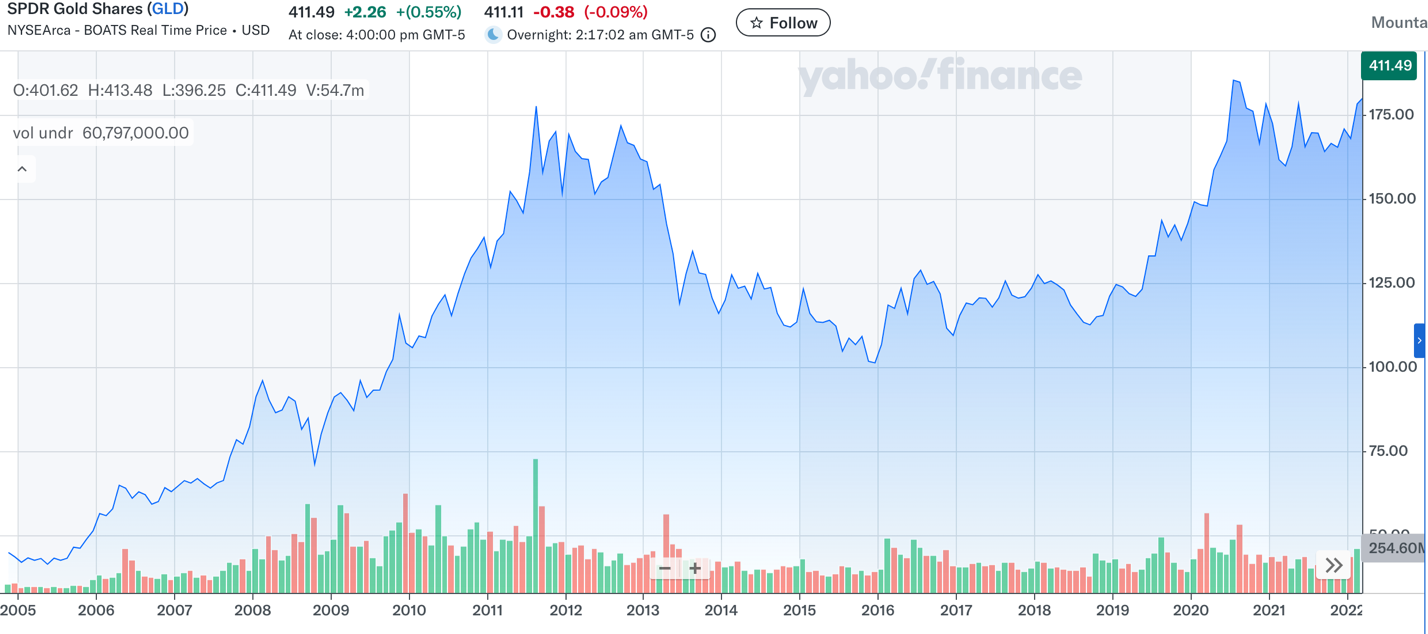
In 2004, the SPDR Gold Trust (GLD) was approved as the world’s first spot gold ETF. At the time, gold’s global market capitalization was estimated at around $1–2 trillion. In the years that followed, supported by ETFs and related financial instruments, gold’s financialization accelerated steadily. By 2025, total assets under management across global gold ETFs had risen to US$559 billion, while average daily trading volumes in the global gold market reached approximately US$361 billion, both marking record highs.
For this reason, when spot Bitcoin ETFs were approved in 2024, many market participants immediately compared their potential impact with the early days of gold ETFs, focusing on whether ETFs could once again serve as a powerful amplifier of trading activity and market liquidity.
So far, Bitcoin ETFs have provided a clear answer.
According to Chainalysis’ ETF flow data, Bitcoin ETF flows have outpaced those of the first net gold ETF from its 2005 launch in inflation-adjusted terms, with Bitcoin attracting significant inflows much faster than gold did in its early ETF phase. In trading terms, Bitcoin ETF volumes have also expanded far more rapidly than gold ETFs did in their early stage. Historical experience offers useful context. After the launch of spot gold ETFs, trading volumes across gold-related instruments increased by orders of magnitude—not only in ETFs themselves, but also across spot markets, futures, options, and both OTC and exchange-traded derivatives.
This experience helps frame the potential impact of Bitcoin ETFs today. It illustrates how ETFs, as a financial structuring mechanism, can significantly amplify liquidity and market participation once broadly adopted. From this perspective, Bitcoin ETFs are not merely following the path of gold ETFs. They are demonstrating how the same financial mechanism can operate with greater speed and stronger feedback in a digital asset market.
The Role of ETFs: A Phase Accelerator of Financialization
Over the past two years, spot Bitcoin ETFs have accelerated Bitcoin’s financialization across several key dimensions.
First, participation has been institutionalized.
Spot Bitcoin ETFs provide a regulated and standardized access path, significantly lowering technical and operational barriers. Investors can gain exposure to Bitcoin without directly holding, storing, or managing the asset, aligning Bitcoin investment with mainstream financial practices.
Second, the investment process has been simplified.
Investors can trade Bitcoin ETF shares through familiar order types, such as market and limit orders, with greater convenience and security. This makes Bitcoin easier to integrate into conventional portfolio structures.
Third, Bitcoin’s acceptance as an asset class continues to grow.
Spot Bitcoin ETFs have strengthened market recognition of Bitcoin as an independent asset class, allowing it to move beyond crypto-native markets and into mainstream asset allocation, wealth management, and long-term investment discussions.
Fourth, institutional and global participation has expanded systematically.
The involvement of leading asset managers such as BlackRock and Fidelity has transformed Bitcoin ETFs into practical gateways for institutional capital. Meanwhile, the rollout of spot Bitcoin ETFs across markets including the U.S. and Hong Kong reflects the global expansion of Bitcoin’s financial integration.
Structural Challenges in Accelerating Financialization and Diversified Participation Paths
The rapid growth of Bitcoin ETFs has significantly accelerated Bitcoin’s financialization, while at the same time amplifying several long-standing structural challenges.
From a market perspective, spot Bitcoin ETFs remain directly exposed to Bitcoin’s inherent volatility. Sharp price movements can lead to short-term valuation swings, while management fees and operational costs gradually influence long-term return profiles.
More importantly, financialization itself is a double-edged sword. While ETFs greatly expand liquidity and market participation, they also shift attention toward price performance within financial products—often at the expense of the underlying reality that Bitcoin’s network still requires continuous hash-rate investment and infrastructure support to remain secure and stable.
From an investor’s perspective, participation in Bitcoin is no longer limited to price-based trading and holding. Beyond spot exposure, ETFs, and trading strategies, cloud mining offers an alternative path built around cost structure and production stability.
Through cloud mining, investors can lock in hash rate and costs in advance, securing relatively stable Bitcoin output over a defined period. In essence, this approach locks in future acquisition costs, allowing investors to build more predictable cost structures and return expectations in a highly volatile market—and offering another potential way to outperform spot prices across market cycles.
At the same time, this model keeps individual capital connected to Bitcoin’s hash-rate ecosystem rather than existing purely as financial price exposure. In this sense, cloud mining becomes a complementary participation path that links investment logic with network infrastructure. It is not only a method of acquiring Bitcoin, but also a form of ongoing support for the network itself, preserving a more diversified participation structure as financialization deepens.
As Bitcoin continues to integrate into the global financial system, these layered and diversified participation models will together shape the foundation of its long-term operation and evolution.

Conclusion
Two years of spot Bitcoin ETF development have clearly demonstrated one thing: Bitcoin is integrating into the financial system faster than many once expected.
At the same time, this process is far from complete. ETFs represent a validated milestone; They have clarified Bitcoin’s financialization path while opening the door for future institutional forms to emerge.
Looking ahead, Bitcoin will continue to evolve across financial markets, technical systems, and infrastructure layers. Different participation models will collectively shape its long-term role within the global financial system.
Two years on, the path continues to extend, and the real chapters are still being written.
Connect with us: