Mining Preparation: How Do I Receive, Store, and Safely Hold My BTC?
One of the most common questions cloud mining users ask is not about hashrate, contract duration, or projected returns, but something far more fundamental: how do I actually receive the Bitcoin I’ve mined?
This question matters because mining itself is not the end of the process. Once mining rewards are generated, users must decide where those bitcoins are sent, who truly controls them, and how they should be stored securely over the long term. For many participants, especially newcomers, asset management becomes the most overlooked yet critical part of the mining journey.
Understanding how Bitcoin is received, stored, and held completes the final link in the mining cycle.
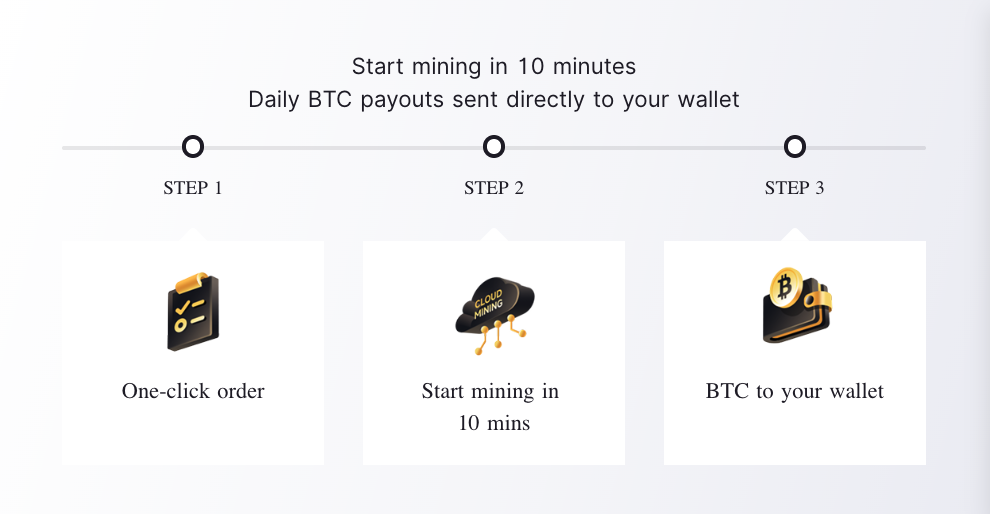
How Do I Receive the Bitcoin I’ve Mined?
1. Receiving BTC Only Requires an Address
Bitcoin does not settle into bank accounts. All bitcoins exist natively on the blockchain, and receiving BTC simply means providing a valid Bitcoin address.
This address functions as your destination on the Bitcoin network. Once it is specified, a mining pool or cloud mining platform can transfer rewards to that address, and the transaction will be permanently recorded on-chain. What happens next—how those bitcoins are accessed, controlled, or stored—depends entirely on how that address is managed.
2. Two Common Ways to Receive BTC
In practice, mining rewards are typically received through one of two methods:
-Receiving BTC to a crypto wallet address, where you personally control the private keys.
-Receiving BTC to a trading platform account, where the platform provides a deposit address and holds custody on your behalf.
While these methods appear identical from an on-chain perspective, they differ significantly in terms of asset control, security responsibility, and long-term risk.
What Is a Crypto Wallet and How Does It Work?
A common misconception is that wallets store Bitcoin. In reality, Bitcoin always remains on the blockchain. A wallet’s true function is to manage the cryptographic keys that grant access to those bitcoins.
Each wallet generates a pair of keys: a public key and a private key. The public key is used to derive wallet addresses and receive funds, while the private key is used to sign transactions and prove ownership. When you send Bitcoin, the wallet signs the transaction with the private key and broadcasts it to the network, where it is validated and recorded.
In this sense, wallets do not hold Bitcoin itself—they hold the authority to control it. This is why the industry repeatedly emphasizes a core principle: whoever controls the private keys controls the Bitcoin.
Types of Crypto Wallets
1. Hot Wallets
Hot wallets operate in an internet-connected environment and typically take the form of mobile applications, desktop software, or browser extensions. They are designed for convenience, allowing users to access balances, receive funds, and transact quickly. Well-known examples of hot wallets include software wallets such as Electrum, Exodus, Trust Wallet, and browser-based wallets like MetaMask (which, while primarily used for Ethereum, also illustrates the hot wallet model).
Because of their accessibility and ease of use, hot wallets are often the first choice for new users and are well suited for everyday operations or smaller balances. However, constant internet connectivity also increases exposure to phishing attempts, malware, and device-level security risks. As a result, hot wallets are generally better suited for operational use rather than long-term storage of significant amounts of Bitcoin.
2. Cold Wallets (Hardware Wallets)
Cold wallets follow a fundamentally different security model by keeping private keys offline. The most common form is a hardware wallet, a dedicated physical device that stores private keys internally and signs transactions without exposing keys to an internet-connected system. Widely used examples of hardware wallets include Ledger, Trezor, and Coldcard, which are specifically designed to minimize attack surfaces and protect private keys even if the connected computer is compromised.
This design significantly reduces the risk of remote attacks, making cold wallets one of the safest options for long-term Bitcoin storage, particularly for large holdings. The trade-off is higher cost, more complex usage, and complete user responsibility for securely backing up recovery phrases. If those backups are lost, the associated funds are typically unrecoverable.

3. Custodial vs Non-Custodial Wallets
Beyond the hot and cold distinction lies a more fundamental classification: custodial versus non-custodial storage.
Non-custodial wallets give users full control over their private keys and assets, emphasizing sovereignty and independence from third parties. Custodial wallets, commonly provided by trading platforms, manage private keys on behalf of users. While this approach offers convenience, account recovery options, and a user experience closer to traditional financial services, it also requires trust in the custodian’s security, governance, and regulatory environment.
How Should You Choose a Wallet? A Practical Framework
There is no single wallet solution that optimizes for security, convenience, and risk elimination simultaneously. A more pragmatic approach is to separate funds by purpose.
Bitcoin intended for frequent transactions, mining settlement, or short-term liquidity can remain in hot wallets or trading platforms. Funds meant for long-term holding or value preservation are better transferred periodically into cold storage. This layered approach does not aim for absolute security, but rather a balanced trade-off between usability and risk management—one that aligns with how most cloud mining participants actually operate.
Can I Keep My BTC on a Trading Platform?
Yes, and many users do. Trading platforms offer a familiar and efficient experience, enabling users to view balances, execute trades, and convert assets to fiat with ease.
However, storing BTC on a platform means relinquishing direct control over private keys. Users are exposed to platform-level risks, regulatory constraints, and potential account restrictions. For this reason, platform custody is generally better suited for transactional use and liquidity management rather than long-term storage.
This reality underpins one of the most widely cited principles in crypto: “Not your keys, not your coins.”
Conclusion
At its core, mining is the process of converting computational power into on-chain assets. Completing that process requires more than generating rewards—it requires the ability to manage those rewards securely and deliberately.
Understanding how Bitcoin is received, stored, and held may not increase hashrate or short-term yield, but it determines whether mining outcomes are truly owned, preserved over time, and usable in the future. When miners close the loop between production and custody, mining becomes a sustainable and long-term participation rather than a fragmented activity.
We hope this guide helps you manage your mining rewards with clarity and confidence—and wish you a smooth, well-structured mining journey ahead.
Connect with us:
相关推荐
矿场突然断电停机?聊聊 BitFuFu 的双重算力保障机制
版面:挖礦攻略
作者:BitFuFu
2026.05.29

2026年为什么比较适合投资云端算力?
版面:挖礦攻略
作者:BitFuFu
2026.05.14