Bitcoin Investment: Spot Trading vs. Cloud Mining
2025-11-07 01:00:00Read the full article
Guest Byline: Charley Brady, Vice President, Investor Relations at BitFuFu
When most people want to acquire Bitcoin, they utilize an exchange—it’s fast, simple, and transparent. But there’s another option that is not as well known: Bitcoin cloud mining. This approach lets you accumulate Bitcoin the way it was meant to be created—through the mining process itself—without the headache of buying and maintaining actual mining equipment. You simply place an order online and start mining remotely.
As Bitcoin moves closer to mainstream adoption and institutional money pours in, the real question isn’t just whether to invest-it’s should you buy Bitcoin outright on an exchange, or earn it through the same process that created it in the first place?
I’ve spent a lot of time analyzing both approaches, and while buying on the spot market offers instant exposure, cloud mining provides something most investors overlook—a steady, compounding way to accumulate Bitcoin backed by real computing power. In this article, we’ll break down how each approach works, their pros and cons, and why more long-term investors are quietly choosing the cloud mining route.
The Direct Approach: Spot Trading
Spot trading is the most familiar path into Bitcoin. You exchange dollars, euros, or stablecoins, for Bitcoin at the current market price, then decide to hold or sell when prices move in your favor.
Most retail investors start with large centralized exchanges like Coinbase, Binance, or Kraken. Apps such as Robinhood provide Bitcoin exposure too, though you often only track the price rather than own withdrawable Bitcoin. Peer-to-peer marketplaces like Binance P2P and Bitcoin ATMs such as Bitcoin Depot offer alternatives, but usually at higher fees for the added convenience.
Institutions take a more structured route, relying on regulated exchanges, over-the-counter (OTC) desks, and custodial services that can handle large trades securely and meet compliance standards. However, this is evolving with the rise of Digital Asset Treasury (DAT) strategies, which integrates custody with active capital management on-chain.
Your buying strategy matters. A lump-sum purchase concentrates both risk and reward at a single price point. Dollar-cost averaging spreads purchases over time, reducing volatility but still leaving exposure to market swings. More advanced traders use limit orders to set their own entry points rather than buying at whatever the market offers.
Mining Without the Hardware Headaches
When people hear “Bitcoin mining”, they often imagine warehouses full of noisy, heat-generating machines. Traditional mining requires serious commitment-buying specialized mining rigs, arranging shipping, securing hosting, managing power, and setting up monitoring and maintenance. For most individuals, it’s simply too complex and impractical.
Cloud mining removes all those headaches. Instead of buying physical miners, you rent computing power, known as hashrate, over the internet from established operators. The platform handles all the operational complexity while you receive Bitcoin rewards based on your share of the total hashrate.
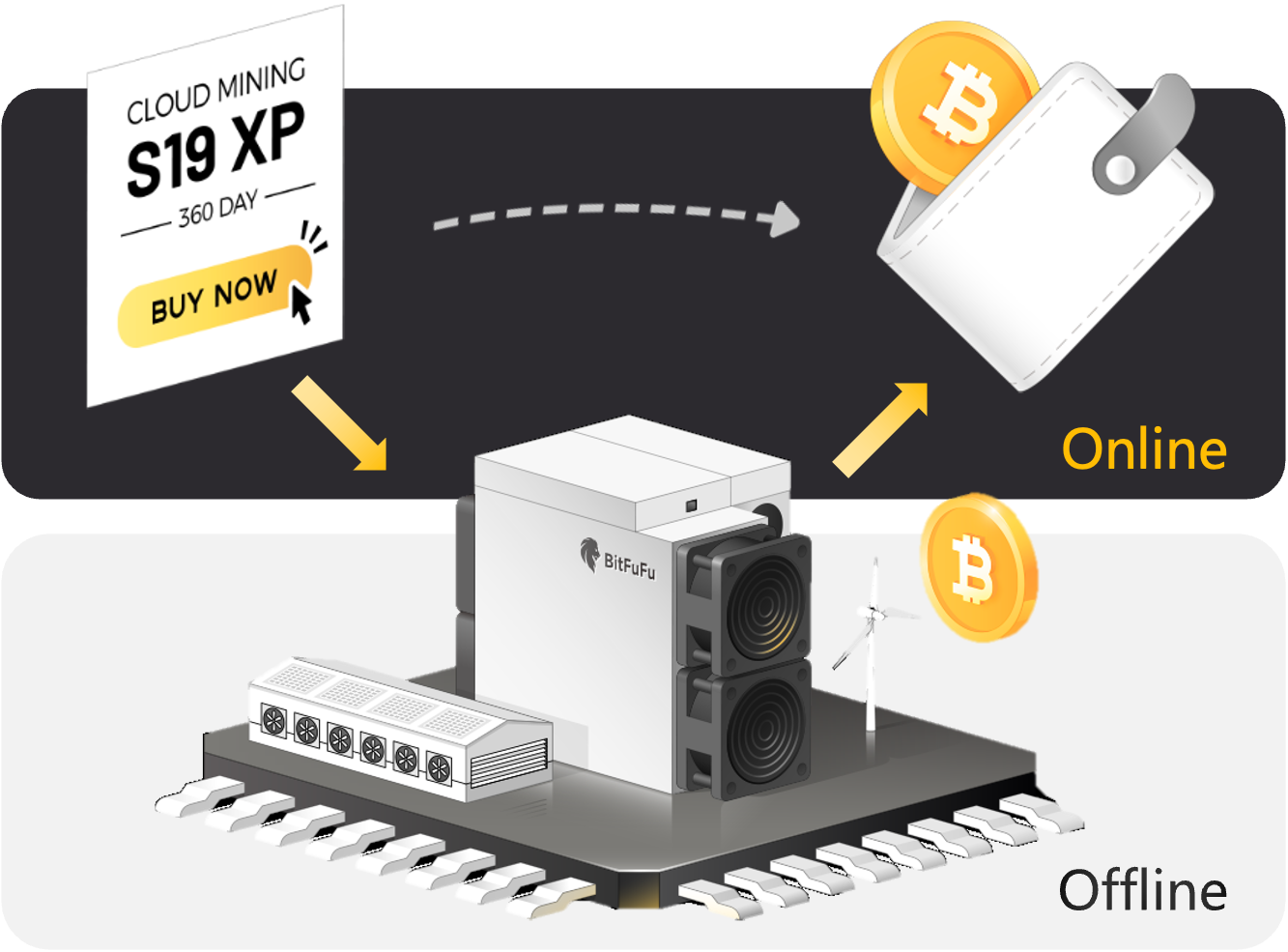
The easiest way in is through specialized platforms like BitFuFu and Ecos. You choose a contract term, purchase the desired hashrate, select a mining pool, and start earning daily Bitcoin rewards. Some exchanges and fintech apps now integrate similar options, while institutions can negotiate customized contracts that provide the scale, compliance, and reliability they need.
This model benefits both sides. Service providers secure upfront capital to expand operations and hedge against Bitcoin price volatility by pre-selling hashrate at fixed prices. Customers, in turn, gain predictable access to Bitcoin, often at a lower cost than buying directly on exchanges.
Behind the scenes, cloud mining platforms take massive mining farms filled with thousands of mining rigs and slice up their total hashrate into bite-sized chunks—think of it like buying shares of a giant mining operation. You might rent 1 terahash per second (1TH/s) of power, which represents your slice of the pie. The best platforms let you trace exactly which machines and locations your hashrate comes from, so you know it’s real. Your rented hashrate gets directed to mining pools, which then calculate how much Bitcoin your portion earned each day and send it straight to your wallet.
One key advantage: while individual mining rigs can go offline due to weather, power issues, or maintenance, cloud platforms use smart routing to keep your hashrate working consistently, which helps stabilize your Bitcoin production.
Comparing the Two Approaches
Investment Philosophy: Spot trading excels at simplicity and liquidity. A few clicks on a major exchange and you own Bitcoin that you can move to your own wallet or sell within minutes. This makes perfect sense for short-term traders, anyone who values flexibility, or investors looking to capitalize on market swings.
Cloud mining appeals to a different mindset—long-term Bitcoin believers who prefer steady accumulation over years rather than frequent buying and selling. There’s also a practical angle: many institutions face restrictions on direct cryptocurrency purchases but can legally invest in mining equipment or hashrate contracts, making cloud mining their preferred entry point.
Cost Structure: With spot trading, you pay market price plus transaction fees. Cloud mining involves hashrate rental fees plus service charges, with contract periods ranging from a few days to two years, giving you flexibility in your commitment level.
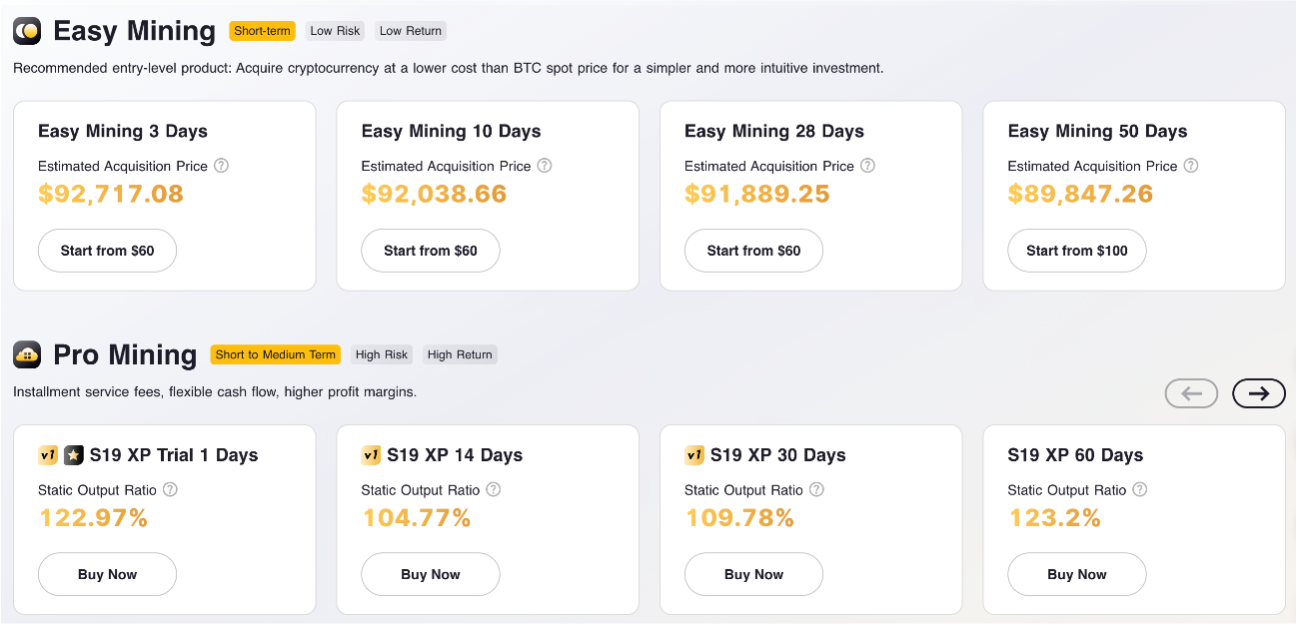
The key difference is that cloud mining lets you lock in your Bitcoin acquisition cost upfront, insulating you from price swings during the contract period. It’s similar to dollar-cost averaging but with a twist—you’re essentially pre-paying for Bitcoin at production cost rather than market price. This eliminates the stress of timing the market, watching charts, and making frequent trading decisions.
Return Potential: Spot trading returns depend entirely on your entry and exit timing. Cloud mining returns factor in both Bitcoin’s price movements and mining difficulty adjustments—as the network gets more competitive, the same hashrate produces less Bitcoin.
Historical data suggests cloud mining often delivers 3% to 20% higher returns than spot purchases over the long term, and tends to hold up better during market downturns. Advanced contracts offer installment payment options where you can pledge already-mined Bitcoin against future service fees, creating a leverage effect that can amplify returns when Bitcoin prices rise.
Risk Profiles: Spot traders face Bitcoin’s full volatility head-on—gains depend entirely on buying low and selling high, and also bear exchange security risks and regulatory uncertainties. The 2022 FTX collapse and 2025 Bybit hack (where over $100 million vanished) serve as stark reminders that these risks fall squarely on your shoulders.
Cloud mining carries different risks centered on platform reliability and transparency. If your provider doesn’t actually own the mining equipment they claim, you could be looking at a sophisticated Ponzi scheme. This makes due diligence crucial—stick with transparent, well-established platforms with a solid industry reputation.
The Bottom Line
Neither approach is inherently better—they simply serve different needs and investment styles. Spot trading works well if you value simplicity and liquidity. Cloud mining makes sense if you want steady Bitcoin accumulation, lower barriers to mining economics, and a more hands-off approach.
For long-term investors, cloud mining offers a disciplined way to accumulate Bitcoin without being swayed by daily market noise. There’s also something appealing about earning Bitcoin through the same process that secures the network—you’re not just investing, you’re participating in the infrastructure that makes Bitcoin possible.
As Bitcoin continues its evolution from experimental digital money to mainstream financial asset, investment strategies are also evolving. Spot trading and cloud mining aren’t competitors; they’re complementary tools in the Bitcoin investor’s toolkit.
Start cloud mining with BitFuFu today
Use cloud mining calculator to learn about your profitability